
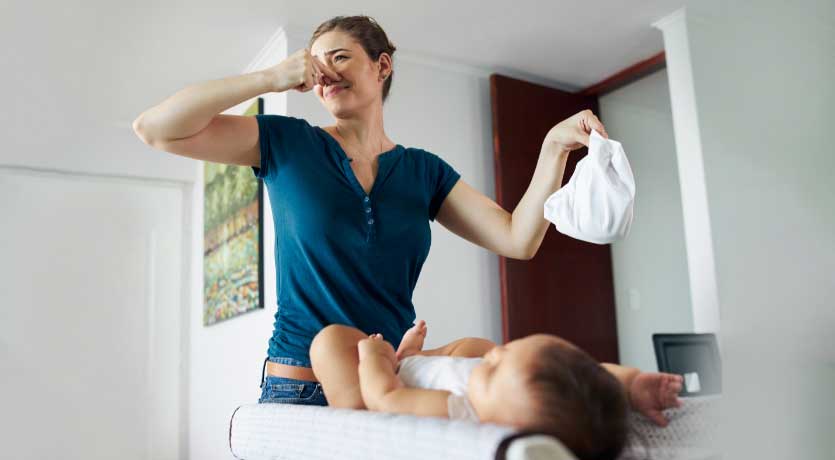

Many parents wonder if their children have diarrhea or just have looser stools than usual? According to the World Health Organization (WHO), diarrhea in infants and children is defined as a condition in which a child defecates more than usual, or more than three times a day, and the stool is soft or watery, mixed with mucus or pus. Sometimes the stool is bloody or black and foul-smelling (which is caused by a disease in the digestive tract). Additional symptoms that appear in infants or children with diarrhea are fever, abdominal pain, bloating, not eating, nausea or vomiting, and in severe cases, coma or severe dehydration.
Diarrhea in infants and children can be caused by many reasons, including:
- Infection with bacteria, viruses, parasites, such as flu or measles
- Food or milk allergy (reaction to protein or lactose in milk, soy, etc.)
- Having a stomach flu, strep throat, or meningitis can also cause children to have diarrhea.
- Food poisoning or eating foods high in sugar, such as ice cream or canned orange juice, and the use of antibiotics (antibiotics) not directed at children can kill the good bacteria in a child’s intestines, making them more susceptible to this diarrhea problem.
- Most cases of diarrhea will go away on their own within a day or two. However, if diarrhea persists, parents should take their baby or child to the hospital as soon as possible.
Parents can take care of their child themselves if their child has mild diarrhea and there are no serious symptoms such as persistent diarrhea, loss of consciousness, is under 6 months old, has a weakened immune system (e.g., HIV), does not have signs of severe dehydration such as sunken eyes, sagging skin after pulling, etc. However, if parents suspect or are unsure about the above symptoms, they should take their child to the hospital for further examination and treatment. In mild cases, parents can treat the child through: If the child is breastfed, the mother should breastfeed frequently and for a long time.
For children 6 months and older, give as much additional fluids as the child can drink, starting with 1 teaspoon (5 ml) every 5 minutes and increasing to 30 to 60 ml every 30 minutes. Give oral fluids in addition to breast milk or formula for moderate to severe diarrhea. The method for mixing oral fluids is to mix the powder with 1 liter of boiled water and give according to the child’s age. For children under 2 years old, give 50-100 ml after each diarrhea episode. For children 2 years and older, give 100-200 ml after each bowel movement. If the child vomits, wait 10 minutes before giving it again, but give it more slowly. Oral fluids left over for more than 24 hours should be discarded. If the child is breastfed and the diarrhea continues, stop giving breast milk and switch to soy or rice formula until the diarrhea is gone and then switch to formula.