
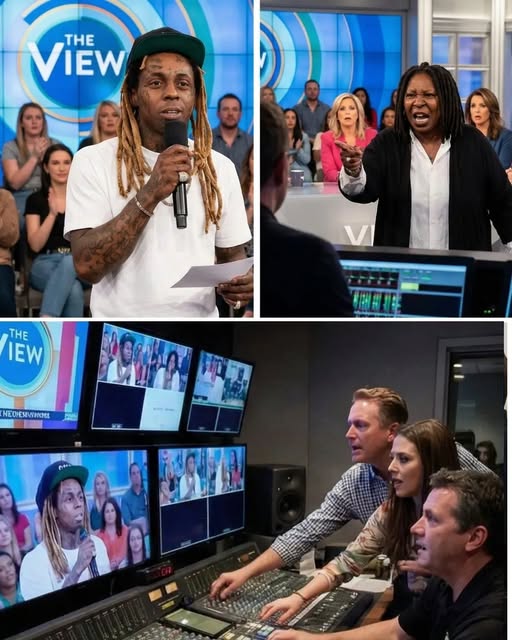
LIL WAYNE walked straight into a moment no television control room could salvage. The instant Whoopi Goldberg snapped, “SOMEBODY CUT HIS MIC!” — it was already far too late. The fuse had burned down, the room was buzzing, and every camera in the studio was locked onto him as The View teetered on the edge of something no rundown had prepared for.

What began as a routine guest segment unraveled fast. Lil Wayne didn’t raise his voice. He didn’t posture. He spoke with the raspy, measured calm of someone who’s been through the system, talked reform, and challenged the status quo from the inside. Each sentence tightened the air. The audience stopped clapping. Producers stopped smiling. The clock kept ticking anyway.
Then came the snap. Whoopi’s command sliced through the studio like a fire alarm. Floor managers froze. A producer lunged toward the switchboard. But live TV has momentum, and Lil Wayne had already said the part you can’t unsay. Cutting the mic wouldn’t pull the words back out of the room — or the millions of living rooms watching at home.
For a beat, nobody spoke. The hosts exchanged glances that said this wasn’t in rehearsal. Lil Wayne stood his ground, eyes steady, hands resting easy — not defiant, just resolved. The cameras stayed tight, because chaos is still content, and America was watching.
Within minutes, clips ricocheted across social media. Some called it reckless. Others called it brave. Fans praised Lil Wayne for saying what daytime TV won’t. Critics accused him of hijacking a platform. But everyone agreed on one thing: The View had crossed from talk show into cultural flashpoint.
 When the segment finally ended, there was no neat wrap-up, no soothing outro. Just a cut to commercial and the lingering sense that viewers had witnessed something raw — a reminder that live television can still surprise, still sting, still matter.