

The Battle for the Wheel: Is Ryan Seacrest’s New Era Erasing Pat Sajak’s American Legacy?
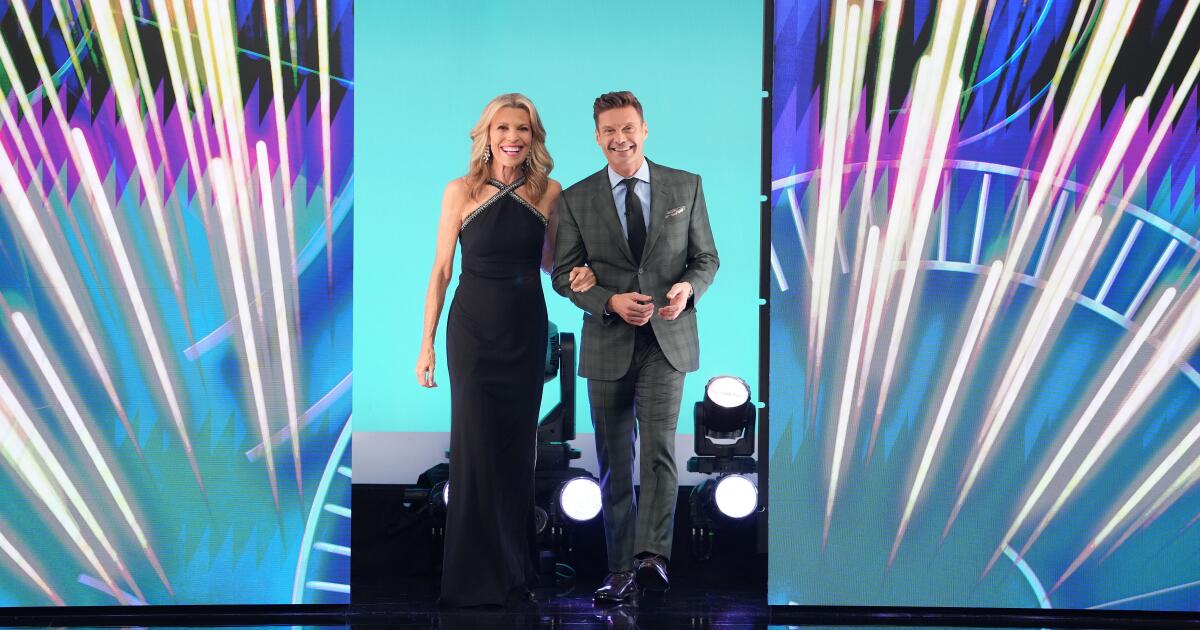
For over forty years, the rhythmic click-click-click of the world’s most famous wheel was the heartbeat of the American living room. Since 1975, Wheel of Fortune has been more than a game show; it has been a sanctuary of stability. At the center of this sanctuary stood Pat Sajak—a man whose dry wit and steady presence became the gold standard of hosting. But today, the Wheel has stopped turning for the legend, and as Ryan Seacrest takes the podium, a seismic shift is occurring that many fans believe is tearing the “soul” of the show apart.
His connection with the audience was built on a foundation of trust. To older generations, he was the familiar friend who visited every evening at 7:00 PM. To younger viewers, he was the grandfather of the game show genre—a link to a “golden age” of television defined by community, shared excitement, and a sense of decorum. Sajak didn’t just host a show; he curated an atmosphere of comfort and nostalgia. When he stepped away, he didn’t just leave a job—he left a void that millions of Americans weren’t ready to fill.
The Seacrest Revolution: Modernization or Betrayal?
Enter Ryan Seacrest. A titan of contemporary media, Seacrest is the undisputed king of the “new guard.” From American Idol to Live with Kelly and Ryan, his resume is a testament to his ability to capture the zeitgeist. He is polished, high-energy, and a master of the digital-first era.
When the producers of Wheel of Fortune tapped Seacrest to take the helm, the logic was clear: the show needed to evolve or risk becoming a relic. In a world dominated by TikTok, streaming, and rapid-fire content, the show’s creators felt a “modern, dynamic personality” was the only way to attract the younger demographics necessary for survival.
However, for the Sajak loyalists, Seacrest’s arrival felt less like a breath of fresh air and more like a hostile takeover. His “youthful exuberance” and “polished presentation” are seen by critics as a departure from the organic, effortless charm that Sajak brought to the wheel. To some, it feels as though the show’s soul is being traded for ratings and social media relevance.
A Nation Divided: The Generational War
:max_bytes(150000):strip_icc():focal(957x359:959x361)/ryan-seacrest-vanna-white-WOF-090324-8879729ef5b84b0d9420b2cc97d411b0.jpg)
The transition has ignited a fierce, multi-generational debate that reveals a deep-seated cultural divide.
On one side stand the Traditionalists. For these viewers, Sajak’s departure feels like the loss of a family member. They argue that the “spirit” of the show—the community, the simplicity, and the heritage—cannot be manufactured by a media mogul like Seacrest. They see the rebranding as a lack of respect for the legacy that built the show into a multi-billion-dollar franchise.
On the other side are the Modernists. These fans view Seacrest as the savior of a classic. They argue that for Wheel of Fortune to thrive in 2026 and beyond, it must embrace the current trends of entertainment. They see Seacrest’s energy as a necessary injection of life into a format that was beginning to show its age. To them, change isn’t a betrayal—it’s evolution.
This friction has moved from the living room to the digital frontlines. Social media platforms and fan forums have become battlegrounds, with “Team Pat” and “Team Ryan” clashing over everything from the set design to the tone of the contestants’ banter.
The Psychology of the Host: Why the Change Hurts
Why does a game show host transition feel so personal? Research into audience engagement suggests that a host becomes an integral part of the viewer’s daily routine. When a host is replaced, it disrupts the “parasocial relationship” fans have cultivated over decades.
Initial ratings for the Seacrest era have been a mixed bag—a classic symptom of a “transitional shock.” While new viewers are tuning in out of curiosity, a segment of the core audience has “tuned out,” feeling that the show has lost the “magic” that made it special. The producers now face the Herculean task of finding a middle ground: keeping the show’s heritage alive while moving forward into a tech-savvy future.
The Crossroads: Tradition Meets Innovation
As Wheel of Fortune navigates these turbulent waters, the path forward remains unclear. The producers are experimenting with a delicate balancing act. On one hand, they are introducing interactive social media components and digital enhancements to satisfy the “Seacrest crowd.” On the other, they are desperately holding onto the familiar music and classic themes that keep the “Sajak crowd” from walking away entirely.
The future of the show depends on whether it can bridge this generational gap. Can Wheel of Fortune be both a nostalgic touchstone and a modern powerhouse? Or will the “war for its soul” ultimately alienate the very families it was designed to bring together?
The Final Spin
Wheel of Fortune stands at a definitive crossroads. It is a microcosm of the broader shifts in American culture—the tension between holding onto the past and racing toward the future.
Whether you see Ryan Seacrest as a visionary bringing a classic into the 21st century or as a symbol of an era that has lost its way, one thing is certain: the era of Pat Sajak is truly over. The Wheel is still turning, but the game has changed forever. As we watch this new chapter unfold, we are reminded that in the world of entertainment, the only thing more powerful than tradition is the relentless necessity of change.