
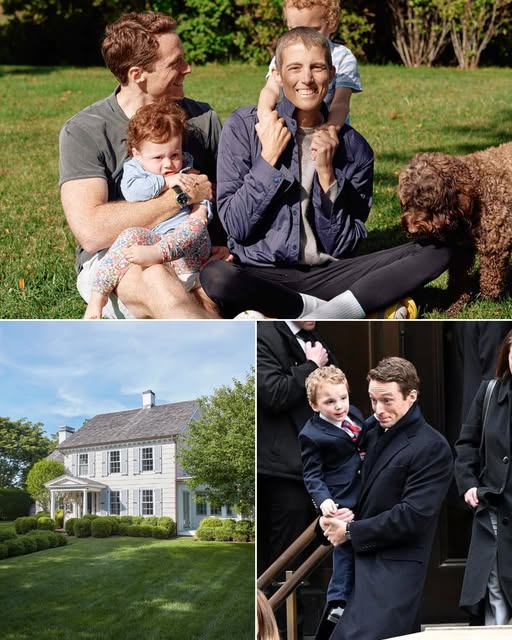
Tatiana Schlossberg Bought a Home for the Future She Hoped Her Children Would Have

In the final months of her life, the journalist and mother made a quiet decision—one rooted not in wealth, but in love, stability, and preparation for the years her children would live without her.
In September, Tatiana Schlossberg signed the papers for a new home.
There were no headlines announcing the purchase, no public statements explaining it, no visible urgency surrounding the decision. To the outside world, it appeared to be a routine real-estate transaction: a spacious Upper East Side cooperative apartment, purchased jointly with her husband, Dr. George Moran, for more than seven million dollars.
Three months later, Tatiana Schlossberg was gone.
Only then did the question emerge—why buy a home so close to the end of life?
The answer, when viewed through the lens of her final year, is not mysterious or dramatic. It is deeply maternal. And painfully human.
Tatiana Schlossberg did not buy a house because she was planning for herself.
She bought it because she was planning for her children.
A Mother Living With the Unthinkable
By the time the apartment was purchased, Tatiana Schlossberg had already been living with acute myeloid leukemia for more than a year. The diagnosis came shortly after the birth of her daughter, upending what should have been one of the most joyful periods of her life.
She endured chemotherapy, stem cell transplants, experimental treatments—cycles of hope followed by devastating uncertainty. While the details of her prognosis were kept private, those closest to her understood that the illness was serious, unpredictable, and potentially terminal.
Yet life did not stop.
She was still a mother to two young children. Still a wife. Still a writer. Still someone who woke up every morning with responsibilities that could not be postponed.
For parents facing life-threatening illness, the future becomes a double exposure: one image shows survival, recovery, more time; the other shows absence. Planning happens in the overlap.
It was within that overlap that Tatiana Schlossberg made one of the most consequential decisions of her final year.
A Home Chosen With Intention
The Upper East Side apartment was not chosen at random.
It was close to her parents, Caroline Kennedy and Edwin Schlossberg—a practical decision for a family navigating illness, childcare, and medical treatment. It was located in a stable, established neighborhood with access to schools, parks, and community.
Homes are not just places to live. For children, they are the physical containers of memory—where routines are learned, where grief is processed, where life eventually continues.
Tatiana understood this.
Buying the apartment was not an expression of luxury. It was an act of foresight.
Preparing for a Future She Might Not See
In her final months, Tatiana Schlossberg was acutely aware of time—not as an abstract concept, but as a finite resource. In a widely read essay published shortly before her death, she wrote candidly about what it means to live while knowing that the future may not include you.
That awareness changes priorities.
For many parents facing terminal illness, the instinct is not to withdraw, but to prepare. To reduce uncertainty. To make the road ahead—one they may not walk themselves—less fragile for the people they love most.
A home becomes part of that preparation.
It answers questions children should not have to ask too soon: Where will we live? Will things change again? Will everything feel unstable now?
Tatiana Schlossberg did what countless parents have done before her, though under far heavier circumstances. She tried to make the world feel predictable for her children, even as her own future became uncertain.
The Silence Around Practical Love
There was no announcement explaining the purchase because there was nothing to explain.
Acts of preparation are often quiet. They are not designed to be seen. They are designed to last.
In public life, Tatiana Schlossberg was careful, thoughtful, and restrained. In private life, she was the same. There is no record of her framing the home as a “final gesture,” because that was never its purpose.
It was not symbolic.
It was practical.
And in that practicality lies its emotional weight.
Reframing the Narrative
After her death, some observers viewed the timing of the purchase through a dramatic lens, as if it were a last-minute decision driven by impending loss. But that interpretation misunderstands how people live with serious illness.
Terminal diagnoses do not arrive with countdown clocks. They arrive with probabilities, with uncertainty, with long stretches of hope punctuated by fear. Life continues in between.
People still plan because not planning would mean surrendering before the story is finished.
Tatiana Schlossberg did not stop imagining a future for her children simply because she might not be in it.
She planned for it because she might not be.
A Legacy Measured in Stability
The legacy Tatiana Schlossberg left behind is not found in property records or price tags. It is found in the quieter outcome of her decisions.
Her children will grow up in a place chosen deliberately for them. Near family. In a home secured not by chance, but by love and foresight.
Years from now, they may not remember the circumstances under which the apartment was purchased. But they will live inside the security it provided.
And that was the point.
The Truest Explanation
So why did Tatiana Schlossberg buy a home just months before her death?
Because she was a mother.
Because she understood that while she could not control the length of her life, she could influence the shape of her children’s future.
Because preparing for others is sometimes the bravest thing a person can do when facing the end of their own time.
In the end, the home was not about where she would live.
It was about where her children would go on living.